Showing posts with label motivation. Show all posts

Monday, August 18, 2025

Get on those barricades (8/18/2025)

As you may have seen in my previous posts, I have been writing about my life and of my immediate family. However, I am currently hitting somewhat of a wall. I guess that happens when you have been reading, listening and watching too much news and combining that with the responsibility as president for a board that is responsible for running a church. Don’t worry, I am not going religious on you. While Unitarian Universalism is definitively a religion, it should not be confused to proselytizing religions. Our motto is that we except folks from all religious and philosophical walks of life. This includes atheists and humanists. We don’t recruit much, but maybe we should; I think a lot of folks could find a spiritual home with us.

But let’s take a step back. These past few months we have been bombarded by news that the climate is worsening including the horrible floods in Texas where at least 135 people died; floods in Milwaukee, New England, New York City, etc.; a pretty strong earthquake and tsunami warnings; wild fires all over the world; and hurricane Erin that went from a category 1 (75 to 95 miles per hour wind) to a category 5 (more than 157 miles per hour or 252 km per hour) within 18 hours. We learn about a flip-flopping tRump who now supports Rusia again, or worse has given us whiplash from his tariff games. Finally, I cannot escape talks about sexual predators on television or in my own life, and no, I am absolutely not one of them, nor have I ever been abused. I have simply not been able to find any good news these past few months. So, why the hell write about my youth and my family; I should be on the barricades.

The Buddhists tell me to live in the moment and enjoy the shitshow. Stoics tell me that even living in the moment will not do it, since this last word I typed in already in the past. They tell me to concentrate on things that I (think) have control over. Talking about barricades, I have participated in a few demonstrations, but is that control? Maybe I have taken control of some of my frustrations by these actions. It definitively feels good to be among peers, people who think the same. However, it sure does not look like I am changing anyone’s mind.

Looking at the blogs that I wrote over the past 12 or so years, I have been warning you about climate change, political extremeness, war, gun violence, the environment, stormwater, soils, life on or near the water, and I occasionally write about life and bonsai. I am hoping that that the occasional post may affect some of you in a positive way; although I have no illusions that I can change the world this way. I confess, I am not doing a damn thing about it except write about it. Yes, I pick up the dog poop when we walk our animals; I recycle (not the poop); we have not used fertilizers or pesticides in our home in years (except my bonsai); we have little to no lawn to speak of; we drive a hybrid; and we vote. Remember, your vote matters!

What message am I trying to convey in this post, what charge am I giving you? I don’t know, maybe this is just a bitch session, a bitch post. Maybe I am trying to get myself motivated to do more; to write more; to bitch more, in the hope to change maybe one mind a year; to get you all motivated to work harder to change this world for the better, for your children and grandchildren. Our descendants deserve a livable world when we are no longer here. Fuck the fake republican fear of budget deficits, environmental deficits make the world unlivable whether we have a balanced budget or not. Let’s get on those barricades together and change the world.

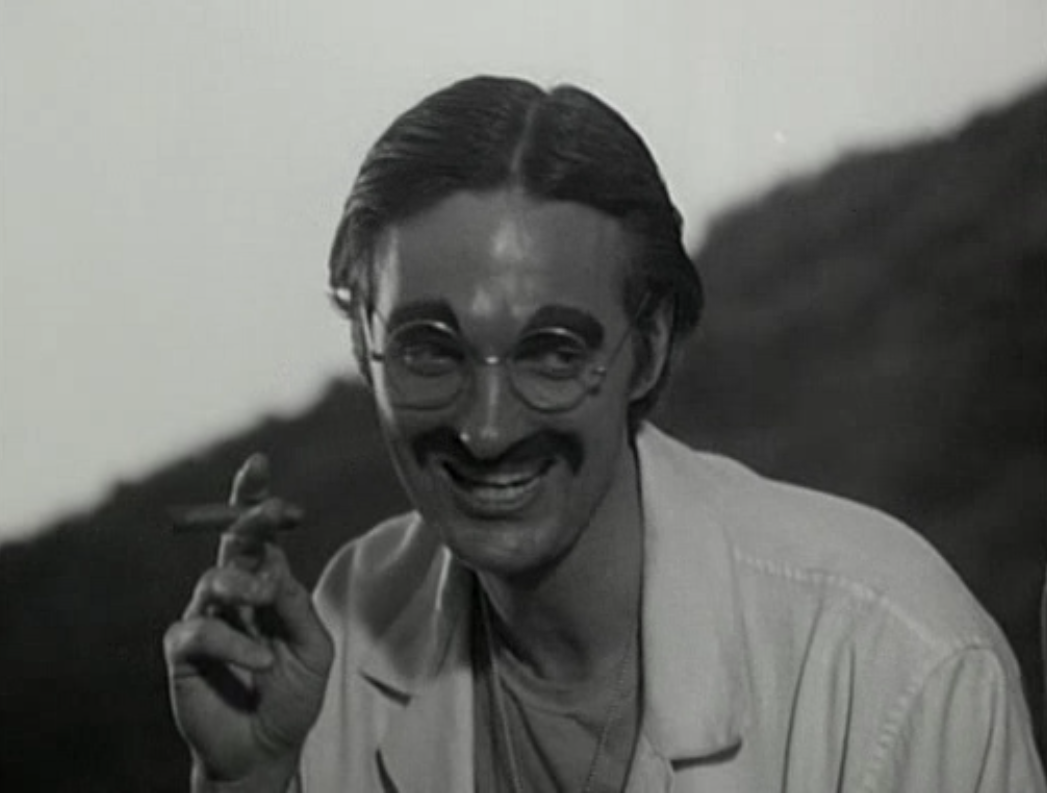
Stolen from the movie Les Misérables


Tuesday, March 12, 2019

You are what you eat (3/12/2019)

Recently, our minister Andrew reminded us in one of his sermons of the four main elements of this world:
  1. Air (Wind)
  2. Water
  3. Earth
  4. Fire
I am not sure what the correct order is, but who cares? The fascinating thing was that I realized that at least every molecule of air and water has probably passed through every person in history, the good ones like mother Theresa and the bad ones like Hitler, Mussolini and my (not so) all-time favorite Idi Amin. I acutely became aware that I was connected to everyone in our sanctuary at that moment, and that I probably had shared at least one or two air molecules with each one of them that morning already.

Water, as Reverend Andrew reminded us, may actually (partially?) originate from comets and connects us to rest of the universe. I remind my students of its unique properties as a solvent, but in particular of the fact that it is the only chemical compound (that I am aware of) that expands when it gets colder. Since a lot of my guys work for the Department of Transportation, this is a fact that is not lost on them. Expanding or freezing water is the origin of potholes in our roads and the source of their job security.

There is not much I can share with you about earth and fire, except that they are the origin and we cannot live without them. I have witnessed the virtual lack of life on the core of the earth in an area of Newfoundland. The Tablelands Areas of Gros Morne National Park is amazing; this area had no (top)soil or earth, and visible life was scarce. It looked like Mars; and word has it, NASA seems to has tested there Mars rovers there.


Gros Morne National Park
This picture was taken by my wife during our trip (2017).  To the right is a wetland pocket where some low vegetation is possible but the majority of the Table Lands look like what is in the foreground.
In my workshops I often tell the attendees that “you are what you eat.” No, as most of you know I do not teach nutrition courses, nor do I give motivational talks hoping they lose some weight or get healthier. I sometimes do get a standing ovation after taking for six hours straight, which I find terribly embarrassing to tell you the truth. Most of you know I am somewhat of a dilatant: a sailor; bread baker; cyclist; naturalist; biologist; photographer; a shin kicker; and amateur philosopher; and a teacher. In other words, I can talk about a variety of subjects for hours. So yes, I could probably give a health talk and yes some of my students could stand to get in shape (but so could I) or stop smoking. But when I mention “you are what you eat” I do this in context of my workshops on soil, plant nutrition and establishment.

Sourdough bread
The latest bread I baked.  It is a banana sourdough and was an interesting bread to make.  No artificial ingredients: bananas, flour, water, salt and natural yeast, that's it.  Honest ingredients, you are what you eat! 
What I tell my students is that when you give your plants a good, healthy, nutritious soil you get healthy plants, or a good vegetative stand, like a lawn. But is you give them a crappy soil you get a crappy vegetative stand or sickly plants. Makes sense doesn’t it? One way of achieving this is by adding organic matter to the soil. Organic matter or compost kick starts the soil microorganisms that are so sorely needed for a healthy soil. This is why I got so angry in this blog at my neighbors for bagging their leaves.

One way of ensuring a healthy soil is by taking soil samples and getting them analyzed by an accredited lab. They should be able to let you know what nutrients are missing in the soil and what you need to add to make it better. I am no enemy of synthetic fertilizer, except for the fact that it takes a lot of energy to produce or transport some of them. But in fact, I really do not think there is a heck of a lot of difference where the nitrogen or phosphorus comes from. However, I am in favor of sustainability. Moreover, a lot of the organic fertilizers bring in micro-nutrients and organic matter which are good for the soil and thus for the plants.

I am no friend of pesticides or chemicals that control weeds and bugs. For one many of these chemicals break down and seem to transform to estrogen type compounds. Honestly, estrogen is not something I want to have a lot of in my body. In addition, I strongly believe that we are all connected in this world and that we depend on each other. Many of these chemicals will travel far and impact and harm more folks and species than we ever intended.

So, where am I going with this post? Talking to my students in workshops, I tell them you are what you eat. The plants they eat represent what they are being offered in the soil. Water, nutrients, organic matter, contaminants and agricultural chemicals including pesticides. We are what we eat: those plants, or animals who eat those plants, the (contaminated) water that we drink. We are the top of the food chain, unless you get mauled by a mountain lion or a grizzly. But in the case of those mountain lions or grizzlies, don’t you want to offer them the cleanest, least contaminated food possible? But in any case, those contaminants are not good for your health neither for for those creatures below in the food chain or potentially above you. Let’s just try to keep our environment clear, our air, water, earth … and fire!

Wednesday, February 6, 2019

The Swiss-Army person (2/6/2019)

I often explain in my classes that biologists would make the great economists. Or, maybe better that economy and biology are very closely related fields. On the first hand, you may think that I am crazy, but I'll try to make an argument for it today. 

I do not strictly believe that we all belong in our silos, but that our professions and specializations can benefit a lot from cross fertilization and interaction. In my sermon, I argued that biology, or my observations of nature, reveal order, mathematics and rhythm. Nature or biology really has so much more to offer or to teach us.

Nature offers something to the artists; just think of the greats like the photographer Ansel Adams, writers like Thoreau, painters likes Monet, and I am just scratching the surface. It offers sanity to the forest bathers, the meditators, those folks who retreat to nature. They all offer nature something in return. Without the interaction there would be no preservation of the natural world. 


About once a month do I see that picture on Facebook that offers you $3,000,000 or some crazy price to go live somewhere in nature without a phone and internet for 3 months or some period. I wish it was a true offer, I would jump at it, and disappear for 3 months, a half year.

But back to what I want to write about today. In my classes I talk about parsimony and how parsimonious nature is. Let’s look at the word parsimonious. It has become one of my favorite words and it means: “the quality of being careful in spending.” You may also call it stingy, miserly, cheap, frugal, tight, or penny-pinching. You get the idea. Not that I live that way, but nature does not waste a thing (unlike most of us humans). If you don’t live as efficiently in nature as possible something or somebody will outsmart you, out-compete you, hunt you down and have you for dinner. It is a dog-eat-dog world out there and if you don’t do it all as efficient as possible you are literally toast!

Nature is very supply and demand oriented as part of this parsimony. If you can do the same thing as your neighbor and use less of the resources available to you, you can literally do more with what is available and out-compete those guys. It is survival of the fittest, of the most efficient, or the strongest. This is the most classic Darwinian concept, but also classic economic model you can find: Supply and Demand.

Then there was the German scientist/chemist Justus von Liebig (1803-1873). Von Liebig also known as the father of the chemical fertilizer developed the “Law of the Minimum.” He figured out that plants (and in his case crops) always had one limiting factor. Once you alleviate that limiting factor, say through fertilization, something else will become limiting (another element or chemical in the soil or something else like water or light). By the way, von Liebig also invented the bouillon block that we use in soup. He was supposed to be a great chemist, philosopher and teacher.

It was around that time that biology really took off, we had Darwin who really figured out this thing called evolution; then we had Mendel who figured out genetics. It must have been an exciting time to live and learn. But both Darwin and Mendel illustrated that there are other forces in play than just biology, or maybe that biology involves economics, mathematics and statistics, just to name a few. Von Liebig had showed it involved chemistry. 


I always tell folks that I probably came the closest to a religious experience when I studied cell biology and learned what all goes on at the cellular level, or maybe what can go wrong on a cellular level. To think we have all these people and other living organisms running around on this earth, was a religious experience to me. It was absolutely amazing and kind of scary. But then I learned we have suicide organelles (or capsules) in our cells and if there is anything wrong, the cells can commit suicide (an interesting concept in itself). This works most of the time, but if not, we grow older and those cells may mutate and could develop cancer. It is all amazingly complicated and it all works; most of the time. But no, I never became overly religious, but I did gain a heck of a lot of respect and love for biology and I retained my spirituality.


Home library
Your's truly sitting behind his desk at home, trying to do some work.  It's a little cramped and I desperately need to clean it up ... maybe this weekend. (photo courtesy of my wife)
As you can see, biology can involve a lot of disciplines, ranging from spirituality to mathematics, to economics to actually life science. I do think multidisciplinary thinking is extremely important. We lose sight of the big picture by being overly specialized. While writing this post I was going through my old posts knowing that I wrote about using past experiences in development of my classes. It was amazing when I reread some of my posts. There are a lot of reoccurring themes here, and I have always wondered if I label too much. However, this shows my multidisciplinary interests, my scattered brain and my love for knowledge (or the unknown). For example, I am currently studying about the construction of embankments and how to compact soil. This is something fairly new to me, I have learned a little bit about it when thinking about the rooting of plants, but never really about building dams. It is fun, and it will be something new to think about and to teach. Life is never boring this way, and all I can say is: go out there yourself, put yourself out there and don’t be afraid to learn something new, something you had absolutely no idea about; become a multidisciplinary persons, we need more of them.  It does not have to be biology, that is just me, just do not stop learning and experiencing.

Monday, June 11, 2018

Depression sucks (6/11/2018)

Kate Spade, Anthony Bourdain, what news stories last week! It really bugs the cap out of me. I have a father who took his own life with a gun. He was depressed and took it out on his loved ones. I was an ocean and a continent removed, but still he did it on the day that I bought a new car to start my new job after two years of under and unemployment. I had called him the day before to tell him this and had no inkling about that he was about to pull the trigger. Did I resent him for that? Yes I did in some form or fashion. Was I hurt? Yes, I think as a family member of or close to someone who commits suicide it hurts, I'll never forget it. In a way I had expected it and had made peace with never seeing him again the last time they visited us, a half year earlier.

A number of years later I got the phone call from my brother that the person we considered one of our best friends committed suicide. My brother tried to convince me that he hurt more than I did. Who gives a shit about comparing hurt at such time or any time after that? Yes, as a younger brother he has always been in competition with me, and even in our friend’s death he tried to be better (more hurt) than me. 


A number of years ago, a good friend gave me credit for saving his life. He was about to do the same and it was me along with a few other close friends who were able to talk him off the ledge. Now every time I see a post of his on Facebook, I still let go a sigh of relief knowing he is still OK, or at least alive. I don't believe you (he) can ever be safe, but hopefully friends and family can help you (him) through your (his) darkest hours.

Growing up I learned that suicide is the most selfish thing you can do in life: “end your suffering but usually substantially increase the suffering of others.” Others say it is a cry for help, at least when people survive the attempt. I am not so sure anymore, I think that is probably mostly bullshit. It is depression, and that can be chemical but also just mental.

Depression is a scary thing, whatever the reason. I have been depressed, and have I ever thought about ending it? Absolutely, but only for a second and never really seriously. First as a teen when my parents pulled me away from my home in the sunny Caribbean and I ended up in damp cold Holland. I also thought about it at some other times in my adult life. Right now I am in a good place, so I have no worries, but I kind of know what depression is. Every time I had those thoughts of ending it, I knew they were ridiculous and would not solve anything, except solve my misery. However, I quickly realized that I would miss out on so much, or the rest of the story, and how hurt we were when our loved ones did it to us. I told myself to snap out of it. I realized that there was so much more to discover, to teach, to see, to photograph, to hobby and now to write about. I had and have so much more to say and (maybe my selfish way) to contribute to society. I forced myself to do one of those things I really enjoyed, like those I mentioned above, or some of the things I have mentioned in my blog like forest bathing, or walking in nature and exploring. It did not solve my depression instantly; yes, I stayed depressed, but every time depression set in I tried it and slowly the veil lifted and things started looking better again.

Here is a selfie of my ugly face on to of Mount Monadnock in New Hampshire.  We hiked it a couple of weeks ago.  Although the mountain kicked our ass (my knees still hurt two weeks later), it was an exhilarating thing; it lifted all our spirits, as it should.
Naturally, I had a few visits to a psychologist, I did not feel comfortable with the guy. But then I went to talk to him about another issue than depression, and he was OK in helping me with the issues at hand. For me it was a lot of working on myself and realizing that I was ridiculous and actually hurting my loved ones. I realize that I make it sound so damn easy, and it isn’t. I am also sure that I again will have periods of depression and hopefully will get through it.

As you can see, this week brought up a roller coaster of emotions for me. I still often think about my father and Rob, especially when there is another high profile suicide in the news. The first time it really hit home was when I heard about Robin Williams, although I have forgiven him, knowing what we know now. The other famous suicides will also eventually slide off my back as well. My father's suicide will never be easy to forget since he killed himself on Dr. Martin Luther King Day, January 15 and I will get a yearly reminder as long as I live.

Monday, November 13, 2017

I am a trainer: The classes that I teach (11/13/2017)

If you are a regular visitor, by now you should know that I give day long workshops throughout the state of Virginia.  I do it for a living and in general I do on to two day-long workshops each week.  I will detail the workshops below, but first a brief explanation.


An updated photograph from 2019 during teleworking times.  I somehow lost the original pic.

We have a mandatory certification program for people working in Erosion and Sediment Control and in Stormwater Management.  In the distant past I used to be in charge of that program, and taught the certification classes.  However, the program was moved from one government department to another, and guess what?  I lost my job as manager of the program.  This is what usually happens with mergers, so it did not come as a surprise.  What surprised me was that they kept me, I was actually afraid of being laid-off or moved to a different job.  However, my current supervisor understood my love of course development, teaching, public speaking, and my life experience.  So, I am still allowed to do what I love to do these things: but especially teach.

Actually, one of the things I was asked to do was to step away from teaching the regular classes and to develop a number of classes that go deeper into the various subjects discussed in our certification classes.  We call these classes our Continuing Education classes; although the other day I called them the Special Ed. classes.  In my classes I stay away from my political opinion (although my regular readers now I have one), I am somewhat of a lecturer, but try to be Socratic at times.  So what classes did I develop and teach?

Integration of Erosion and Sediment Control and Stormwater Management Program – This was the first course I developed.  It dealt with the transition from one department to another and the adoption of the then new stormwater management regulations.  I talked about how the two laws and regulations interacted and complemented each other.  Many of the Erosion and Sediment Control professionals were all the sudden faced with having to deal with enforcing the new Stormwater regulations and having to deal with a new State agency.  This was a very intense 6-hour class; it also introduced a lot of controversial new regulatory issues.

Plan Review Using the Older Standards – Since the adoption of the new Stormwater Management Regulations there were a group of older (grandfathered) stormwater structures that needed to be reviewed by folks who had never reviewed them before.  We teach the review of the new Low Impact Development (LID) Best Management Structures (BMPs) in our regular classes, so this class was for the review of some of the older more traditional ones.  This was another intense 6-hour class.

Erosion and Sediment Control Inspector Refresher Class – Everyone needs a refresher class so now and then; to go back and to hear it all again.  I end this class with a Bingo game.  This is a fun filled, very interactive 5.5-hour class.

Native Plants for Stormwater and Erosion and Sediment Control – Being a Plant Ecologist by training, this class was my first real hobby class.  I love doing this class and people seem to enjoy it as well.  I will be redesigning it this winter a bit, and will de-emphasize the law and regulations a bit and add more discussion about the various plants (that is what I also one of the comments in the evaluations of the class I received).  One or two people have an issue with me bringing up evolution and natural selection in this class.  So be it.  This is a very intense 6-hour class.

Applied Soils for Erosion and Sediment Control and Stormwater Management Professionals – This is another one of my favorite courses.  I developed this with a dear friend of mine.  We taught it together until he left the department; and now I am on my own.  In this class I deal with soils in three ways.  I look at it from the agriculture (USDA) side, the hydrology side and the engineering (Unified Soil Classification) side.  Then I try to tie it in to our job in construction as it relates to erosion and stormwater management.  This is a great 5-hour class.

Wetlands for Erosion and Sediment Control and Stormwater Management Professionals – This is not a class intended to turn people into wetland delineators.  While I worked as a delineator for over 15 years, that is not the intent of this class.  What I do in this class is teach inspectors and plan reviewers to recognize “red flags” and know what to do when they see them.  I also want them to know how to react to sediment releases in wetlands.  This past week I taught the last of this class in its current format.  I will be redesigning it and taking a lot of the discussion on law and regulations out of it and putting it on-line.  For the rest, I again want to make it more hands-on and show pictures of plant species (invasive and typical wetland species) to get people more in to it.  This is a 6 to 6.5-hour class.

 SWPPP Inspections – This is the most interactive class of the bunch, with a class exercise.  We discuss the development of a Stormwater Pollution Prevention Plan, the different elements and the inspection of a site for compliance with the SWPPP and the Pollution Prevention Plan (P2).  This is a great 5-hour class.

Where the water goes – A class subtitled “Hydrology for Inspectors.”  A class that deals with the flow of water on a construction site.  How water behaves itself on slopes, why it matters and what we do to mitigate for its effect.  We discuss how we manage the flow of water on a site and examine a lot of “how-not-to” photographs.  I love this 6-hour course.

Soil Amendments for Erosion and Sediment Control and Stormwater Management Professionals – This is a 3-hour course divided into two parts.  The first part deals with the use of compost and fertilizers in the restoration after construction has been completed.  In the second part we discuss the use of special soil mixes for bio-retention areas.

Photography for Inspectors – This is also a 3-hour course that I usually do in combination with the previous course.  As readers of my blog may know, I am somewhat of a photographer and I have been trained in it.  I teach the do’s and don’ts for inspectors as well as some of the photographic theory. 

Finally, I am in the process of developing some more classes (no rest for the weary).  But it keeps my brain going, it keeps me young.  I often joke, that I roll out of my motel bed in the morning and look on my sign-in sheet what class I am teaching that day; for sure, never a boring day.

In addition to all these classes, I also do some workshops on request here and there that are hybrids between these classes.  As I tell my students, if you have ideas for classes let me know.
   
I will also entertain special requests to teach any of these classes or any workshop where ever you are.

Tuesday, June 13, 2017

I’ll stop learning when I’m dead (6/13/2017)

So here I am doing one of the more stressful parts of my job: auditing the courses people submit to us as part of their recertification requirements.  I wrote about it before <here>, but when a course does not qualify, I contact them and tell them that I will be removing it from their record and that they will need to take another class.

Here is a response I received: “That is very disappointing to hear.  I will be sure not to attend any future presentations by Mr. B…”  Suffice it to say we had a big laugh about this one in our office; what a baby.  It was only one hour of the 18 hours this person needed to accumulate over 3 years.  When I teach a whole day class they get 6 hours.

But then it struck me, how sad!  These are those people that I talk about in some of my my posts (and what I hint at in the title of this post); they come to my classes, sit in the back and either constantly browse on their phone (Facebook, porn?), or have their sunglasses on so you can’t see that they are actually sleeping.  These are those people that go home after a day’s of work grab a six pack of bud light out of the fridge and plop themselves in front of the TV and pass out, even before going to bed.  Their wives (spouses) either have affairs or have gained so much weight because their sex lives have gone to hell anyway, that it does not matter anymore.  This is what a couple of six packs, ESPN, FOX news and maybe a few porn sites during my classes do for them.  Figuratively these people are already dead, but they don’t know it yet, but mentally they are, they stopped learning.

That’s what the title of this blog refers to.  A lot of people that I encounter in my profession sit through my classes but they do not want to learn.  They have no interest in being educated.  They go through the motions.  I wish that I could kick them out, deny them their certificate, but I can’t.  I mention in one of my posts, that the thought that I may educate one or two persons in a class of forty is enough.  Even here that serenity prayer that I introduced in my previous post is applicable:  “Please give me the serenity to accept the things I cannot change, the courage to change the things I can and the wisdom to know the difference.”

I am finishing this post on a well deserved vacation to Newfoundland.  I took this photograph of an iceberg floating off the east coast.  This is what is so important and frustrating to me: global warming, environmental issues, and the "I don't give a damn" attitude of some of my students. 
I may be a dilatant, but it is better than being ignorant.  When I went to graduate school, I did not only take courses that applied to my degree; I went berserk trying to get an education.  This was probably to my detriment, I did not graduate with a 4.0.  My class load was always too heavy, but I wanted to learn as much as I could.  That was important to me, learning!  Getting older, after a full day of work and two and a half hour total commuting I am tired when I come home.  But the least thing I can do is watch a YouTube video here or there about growing or taking care of Bonsais, which is one of my hobbies.  I am trying to learn something there.  I read when my eyes and brain can handle it.  I usually read non-fiction, I want to learn!  At home we rarely watch TV; maybe the news and a cooking or a home show so now and then, but that’s it.  This summer we’ll watch the Tour de France.

It is absolutely amazing that the country where everybody used to look up to for its education, its research and modernity is now cutting education, making fun of people who are educated and is in a race to the bottom, for the lowest common denominator.  A university education was affordable when I came to the U.S. in 1979 to study.  Now they have raised the cost of university education so high that it is out of reach of the common man.  We are creating a tremendous class system in this country between the wealthy educated upper middle class and not so wealthy lower middle class and the working class.  No wonder some talk about “the educational elite” as if it is a stigma.  No wonder we want to go back to burning coal for energy as opposed to developing high-tech means of generating energy.   


Sir Francis Bacon is commonly quoted of first saying that “Knowledge is Power.”  Bacon who lived from 1561 to 1626 is considered the father of scientific method.  For example Thomas Jefferson, himself a(n amateur) scientist, considered Bacon one of the greatest men that had ever lived.  I think it is true that knowledge is important and power.  One of the things I treasure most is learning and knowledge.  When I cannot learn I would die or be dead.  During my commute I listen to Doctor Radio on Sirius-XM, I need to learn; I often joke that by now I could sit for my medical boards and pass them, except I never dissected a cadaver.

All my bitching and moaning aside, learning and knowledge is not only good for you mentally.  It has been shown to slows down our mental decline in old age, helps us socially and may even help us financially.  Finally, when we are all educated, society will benefit as well, only then can we change the world for the better for all and eliminate the great divide between people.  


Monday, December 12, 2016

Having flow, I can fake it with the best! (12/12/2016)

Last week I experienced flow again.  It was a crazy couple of days.  I was on the road for six days, two three day stretches, with a Friday and Saturday of relative rest (home chores) in between.  I put over 1000 miles on the vehicle that I got from our motor pool that week (thank goodness it was not my own car).  

When I was a young kid, driving large distances really did not bother me, I remember that day that we drove from just outside Little Rock, Arkansas to Wilmington Delaware (1,100+ miles) in one day, and the next day we went for a large hike.  This last time, I had to drive back at night in the dark in the pouring rain; at times I had zero visibility.  The day after, I was sitting in the office feeling like a zombie; it was an almost completely unproductive day.

You would think that after driving to the location where I teach, followed by a rotten (first) night in a different bed (motel room), I would be out of it.  I might feel like it, but the moment I step into the classroom, it is like a switch is being flipped. 
Ready to start my day of teaching this past Monday 12/5/2016.  Boy, I have never used that many selfies in my blog!  But you can see, I was kind of out of it, not yet ready to get going, but it changed once I opened my mouth. This picture was manipulated with a small program called Prisma; I used the Mosaic option.
I have this ritual when I teach and it really helps me get my stuff together.  I can be in the crappiest mood, or tired; drag myself out of my motel bed and into the room where I will be teaching, but when I get in there, I forget about it all.  I can literally solo teach for six or seven hours; be on; be engaging; feel great; and simply do not let on what’s the matter with me.  I give it my everything!  Oh yes, I can fake it with the best!  But when when the class is done and the last person leaves the room, I am done for, I am exhausted.  As a fellow teacher of mine and I once compared: "Good teaching is like good sex, you are exhausted after that."  Hopefully I am teaching a second day and I can go back to my motel room and go for a nap.  Having to drive back to the office and then back home is tortuous at times.  

No, I am trying to show off or complaining.  I am just sharing my technique; my way of doing it.  I probably take it too far and exhaust myself too much, but I made a promise to myself to never give a boring class.

My morning ritual is really simple.  I get to the room where I teach about a half hour early, set up, put out the sign-in sheet, and then I try to make small talk.  I talk with people (I think) I know.  I ask them about their life, make small talk, and I am personable.  It is a one on one link that I establish with a few that helps me teach, it allows me to search them out later and make eye contact.  Being an introvert, this is my way of drawing me out of my shell, and getting me in that mindset of putting myself out there and teach; of focusing of the task at hand.  I learned this a long time ago; I need to socialize to get the juices flowing.  Even during the breaks I give people; I don’t even get to go to the restroom, but I am in front of the class answering questions and talking to people.  Usually I am on all the time, with just enough time for lunch.  That is often the only time when I don't mind being on my own, that is my time to recharge for the afternoon session.

For me it is all about being in the zone, having flow.  As I mentioned in my post on how sailing meditates me, flow is important.  When you have flow you forget the bad things that surround you.  You forget that you are tired, you live on adrenaline, you are in the zone.  You fake it with the best!  Or do you really?  Maybe it is genuine; I really genuinely care about what I teach and I care about my students; otherwise I would go through the motions and not achieve flow.

So how do you achieve flow?  To each his or her own, but as I mentioned, I have somewhat of a ritual.  Owen Schaffer mentioned that there are seven conditions for getting, being and staying in flow:
  • High perceived challenges
  • High perceived skills
  • Knowing what to do
  • Knowing how to do it
  • Knowing how well you are doing
  • Knowing where to go (where navigation is involved ... or maybe my ritual)
  • Freedom from distractions
This is how I am when I sail, teach, kayak, bike, work on my bonsais, and when I go for a nice walk in nature.  Interesting isn't it?  To think that I am not even that good at some of these things or really do not know what I am doing, I get to that state of flow.  Enemies to flow are boredom, apathy and anxiety.  Flow keeps you alive, boredom, apathy and anxiety are killers.


Nothing better than a morning hike through the woods, exploring life and death around you.  Here is where I experience flow, forget about it all and take photographs to document nature's beauty, even a dead tree that is slowly decaying.

Wednesday, October 26, 2016

You gotta please yourself ... on Training and Teaching (Part VIII) (10/26/2016)

This morning I had to think about the Ricky Nelson tune entitled Garden Party and the refrain:


But it is all right now, I learned my lesson well
You see, you can't please everyone, so you gotta to please yourself

and no I do not hide any overt sexual message in this quote and I do not think Ricky Nelson did either.

Going through the evaluations of the courses that I teach there is always one or two persons that misunderstand your intentions.  This last time an introduction and update of our program was seen as small talk and stalling until all the students were in.  I find it very important to let people know what is going on.

A few weeks ago we got these answers on course review questions:


3.  What did you like best about the course?  When it ended.

4.  What did you like least about the course?  Too long for value it serves for recerts.  Just another political example of ... <our agency> swinging their small sword with massive force.  Wasted hundreds in tax payer’s money for instructors + thousands in salaries and time of certified professionals.


5.  My comments or suggestions to better improve the course are: Do away with 18 credit nonsense of self-indulgence.

Thank goodness against that are 88 satisfied customers (aka students) so I am not worried, but in those cases Ricky Nelson's tune is very appropriate, and yes, the night before the class I pleased myself with a walk on the boardwalk of Virginia Beach following a pleasant dinner.  As many of you know, I am a "child" of the sea and nothing better than walking along the ocean.
Virginia Beach, Neptune, Ocean front
I generally shy away from selfies on my blog, but what the heck.  I should try to laugh more or make crazy faces, but here you have it, wind blown and really having fun.
But I think there is a valuable lesson to be learned here.  No, you can't please everyone, and that is a good thing.  When I was in the public radio business (yes, I dabbled in that too ... <this> was the station we started) we always said that if we did not at least got one complaint per hour, no one was listening.  So having someone complain about the class means that at least that person was paying attention.  Honestly, you can do things to the best of your ability and feel good about it.  You gotta please yourself.  If you are not happy with yourself, you do a shitty job.


Tuesday, October 11, 2016

On Training, Teaching (Part VII) and Performance Reviews (October)

One performance review down and how many more to follow?  Not that it was a bad review; actually the review was pretty darn decent and I should be proud of it (yes I realize … some shameless self-promotion here), but you wonder what the use is of these annual rituals.  I always come out of these things with a bad taste in my mouth.  In private industry they were tied to promotions, raises and bonuses, and I did not believe in them back then; and let’s not talk about raises for State employees.

In a 2012 article in Forbes Magazine 2% of 645 human resources managers thought that performance reviews accomplished anything useful.  It got better, 57 % of the CEOs thought that their employees were regularly recognized for their hard work and contributions versus 9% of the employees who agreed with the CEOs.  In 2014 Josh Patrick wrote a blog in the New York Times entitles “10 Reasons Performance Reviews Don’t Work.”  Yes, I see myself in that.  I managed people and I had to review them, and it was very difficult to be honest without upsetting people or making them angry (No. 9); buy-in was always an issue (from them and from me in reviews of me) (No. 8); what follow up? (No. 6); I was never trained or given any guidance by HR in doing performance reviews (No. 3); and let’s not talk about results after a performance review (No.1).  The others did also apply, but you get the idea. 


This is a copy of a picture from an interesting article for people stepping into a performance review.  Guess what?  This is not what you do, although like me you might have felt like flipping it.

So what should be done?  I am in no way an expert or a human resources manager.  I only know what motivates me, that is: I would prefer regular feedback.  Moreover, that is regular positive or maybe constructive feedback and compliments on achievements.  But isn’t this the case for everyone?  But the forced ranking that is being done everywhere just does not work, even if it is hidden in a nice essay; you still have that ranking somewhere on the side. 

I have always been a strong believer in doing everything to the best of my ability and giving it the full 110%, in particular in my current job, where I get to teach and help to protect the environment.  I teach with the attitude that I succeed in my job today if I really educate one of two persons in my class today and they take what I taught  home and spread the word (or be a changed person).  Yes, I probably have 36 other students looking at Facebook on their phones while I teach and the remaining two probably cruising porn sites, but so be it; if I can really motivate two in a class of forty, I am happy.  That keeps me going and that is why I do the best job I can do.  I don’t need any performance reviews for that, my students write reviews of my classes at the end of the day and those are important to me.

Tuesday, November 3, 2015

Stormwater (11/1/2015)

I have been doing some literature research on the history of stormwater management.  OK, call me a stormwater geek or a stormwater nerd, but I just realized that I have been actually fascinated about it for probably more more than forty years and I never noticed it until this weekend.

It all started in 1972 when I read an article somewhere about an agriculture and reforestation project in the arid mountains of Algeria.  This fascinated me and prompted me to do a literature search on the subject of desert revegetation at my college library in Holland where I found a reference to a new (scientific) book by Michael Evenari and co-authors called: The Negev, The Challenge of a Desert.  It was published in 1971 and I borrowed it through inter-library loan.  It came from the Dutch Library of Congress, it appeared that I was the first one to read it.  I devoured the book.

In this book Evenari and his colleagues describe how the old Bedouin tribes were able not only to survive in the desert but actually to thrive by practicing agriculture in the Negev Desert of what is now Israel.  They built extensive drainage canal systems on hillsides that captured runoff from the sparse winter rainstorms and brought the water down to the agriculture fields.  Very different from what we did with stormwater until the early 2000s; which is, getting rid of it.  At least now we are back to teaching people to conserve stormwater; to conserve it and infiltrate it.

Walking to work in Richmond this morning (11/3/2015), ready to go back out on the road and teach about stormwater management and conservation, and erosion and sediment control. 

I have always credited Evenari for steering me into the field of desert ecology; his book has a chapter on plant survival in the desert environment and it was my first encounter with that subject as well.  Ever since reading that chapter I have been fascinated with plant physiological ecology, in particular the adaptation of plants to stressful environments such as deserts, the subject I specialized in for my PhD.

Events in real life kept reminding me of Evenari's book.  In Yemen I saw some of the same water harvesting practices that he described seeing in the Negev Desert.  I also saw the same plant adaptations in Yemen and in New Mexico as he saw, and it always brought me back to his book.  So much so, that  Evenari's book was one of the first purchases I made on the fledgling Amazon.com years ago, it was a book that always stayed with me.  So yes, it was fun to open it again this weekend and to leaf through it again.

Now 40 year or more later I can credit Evenari for even more than just turning me into an physiological ecologist.  Truth be known, I am more a stormwater geek or nerd now; maybe also thanks to that book, a realization I all the sudden have all out of the blue.  It is fun to see how your life comes full circle, all the way back to stormwater management, the most important subject in the book.  It is amazing how one event, or one book can have such a (subconscious) influence even if you don't realize it then, but only now 40+ years later.  I am sure that many of you have events, books or even radio or television shows that are somehow pivotal to your career or even your life, that you do not realize until many years later.  Cherish those moments, I cherish mine right now.


Thursday, August 20, 2015

On trainers and teaching, Part IV (8/20/2015)

Most days when I commute to Richmond I listen to Doctor Radio on Satellite Radio SiriusXM Channel 110.   Thursday mornings between 8 and 10 is the Emergency Medicine Show with Drs. Billy Goldberg and Howard Greller.  In his show Dr. Billy lamented about someone complaining about him being a clown on the radio and his shtick and that struck a nerve with me.

Being a public speaker/teacher who travels throughout the state of Virginia people are always surprised to hear that I consider myself an introvert.  When I am in front of a class I make the darnest effort to lose that and I try to fake being as much as an extrovert as I can be.  Yes I move around a lot, that is my way of loosening up; I joke, I tell (to many?) stories and anecdotes; and during breaks I try to interact with the students to see how the class is going.  Yes, I have been told that I am too flippant or cynical at times, but in my eyes that's to make a point.   Trying to be an extrovert is absolutely exhausting to me!  It is so nice to just sit alone in a restaurant later that evening and people watch, not having to interact with anyone.  There are exceptions of course, and that is when I teach with close friends.

So yes, I do understand Dr. Billy, you have to be serious in your job, work is a serious business, but you need an outlet, some levity whether you are an emergency doctor, or an introvert in a job made for extroverts.  You can heal, teach, do your job at your best without taking yourself too serious all the time.  This reminded me of the episode of MASH where Alan Alda came into the O.R. dressed like Groucho Marx. 


How can I be sure I am an introvert?  I’ve knew it all along, but really figured it out when I went to leadership school for the UU church we go to.  We had to do the Myers-Briggs Personality Test and it showed I was an INFP or someone who is an Introvert, who relies on Intuition, who is Feeling and Perceiving.  Reading some of its descriptions even in Wikipedia INFP describes me to a T, including the desire for creativity but also (as most of the people close to me will attest to) my sensitivity to criticism.  Wikipedia shows an interesting list of people who are INFPs.  Wow. 

How does this relate to training?  Well borrowing this from Wikipedia:

  • I – Introversion preferred to extraversion: INFPs tend to be quiet and reserved. They generally prefer interacting with a few close friends rather than a wide circle of acquaintances, and they expend energy in social situations (whereas extraverts gain energy).
  • N – Intuition preferred to sensing: INFPs tend to be more abstract than concrete. They focus their attention on the big picture rather than the details, and on future possibilities rather than immediate realities.
  • F – Feeling preferred to thinking: INFPs tend to value personal considerations above objective criteria. When making decisions, they often give more weight to social implications than to logic.
  • P – Perception preferred to judgment: INFPs tend to withhold judgment and delay important decisions, preferring to "keep their options open" should circumstances change.

Combine that with statements like low assertiveness and poor organization, and that is probably how I might be perceived by some of my colleagues.  My office may look like a mess, my brain is a mess, but it is all there.  I brood, and at one point it all come out and it flows out on Power Point, in a blog, all in a concise package that we can call a class, or rambling like this.  Even in planning trips, or shed building projects in the back yard.   My wife has learned to roll with the punches it all comes out ok even without paper plans and assertiveness.  I know it and so does she.  

Thursday, July 30, 2015

On trainers and teaching, Part III (7/30/2015)

The latest issues of ErosionControl Magazine featured an interview that Carol Brzozowski did with me a year and a half or so ago.  I really had forgotten about it and about a half year ago, I figured that the interview had flopped, and it was all just hype and would never get published.  I added a copy of the article below (you will need to click on the article to get a larger version which might be easier to read).  I’m pretty thrilled by it; the only thing I would have liked to see is that it listed my current employee (the Department of Environmental Quality or DEQ).  I am having a lot of fun here, and moreover, I have a set of great colleagues and co-instructors here that really do not get mentioned in the article.  In a way it is a bit of a shame I did not get to see the article before it got published otherwise I would have asked to add those things.  Oh well.  You always hear that from people who get interviewed.


Anyway it is a nice closure to a fairly stressful few months with a lot of work, travel, some health issues, and even some mechanical issues at home like the kitchen sink and a lawn mower breaking.  Hopefully, that light at the end of the tunnel isn't a train barreling towards me.

Regular readers of my blog, my students and my friends know I have a passion for the environment, teaching, fairness, and social justice.  I am really hoping that this article did some justice (pardon the pun) to some of these beliefs and that I will be able to continue to do this work for a long time.  I have a wealth of life experience to share with people, and I really feel it would be a waste if I don't.  In the end I hope to leave one very small corner of this world a little better than I found it, or maybe better, when it found me.  Wouldn't that be nice!


Thursday, June 11, 2015

On trainers and teaching, Part II (6/11/2015)

As a teacher/instructor I am getting this feeling that I am becoming overly-critical of how others prepare their lectures, prepare their materials, or do their teaching jobs.  This sounds horribly arrogant; I caught myself being critical yesterday when I reported on the various classes and seminars I attended in the past few days.  I am aware that I am becoming a curmudgeon in my old age and it is something I want to avoid at all cost, but I often wonder why people just plainly accept lousy teachers and sit through a class or seminar.  I have a lot of very good fellow teachers in our group (and then to think we are not professional, or I should say formally trained instructors); we all have our own style (thank God), but it is more about classes and lectures given by people outside the agency I work for.  Some of these courses have nothing to do with the subjects I generally teach; they even include some of the sermons I see at the church I visit.

One of my fellow teachers in the class for inspectors that he and I taught.
That my criticism may be off base and/or lead to (the perception of) arrogance became more apparent after talking with my supervisor and after reading reviews from various classes I taught and some of the classes that other people taught while I was observing.  They really loved the latest class that I was somewhat critical about (in my head but not vocally to the instructor, in particular since the reviews were very good).  I really wonder what I missed, but it appears that students were glad to learn more details on subjects they learned in a previous classes, in particular in preparation for the exam they have to take.  So yes, while we say that we don't teach them to take an exam, in reality we probably do, or that is what our students want us to do.

Teaching is something I truly enjoy and talk about in my blog (look for the keyword/label: teaching or training).  I too tend to get very decent reviews and some not so good reviews (see the photo below; yes, there are always a clown or two in your class).  I take serous reviews seriously and try to learn from them, but these were somewhat rediculous.

The joker
The angry person
I am still not aware that I have an opinionated liberal agenda, other than on that specific day, I talked about evolution and the need to preserve trees.  However, I suspect this was the guy I asked to stop having very loud side conversations with some of his fellow students while I was teaching and others were trying to listen to me instead of to him.  So yes I do take reviews personal and try to learn from them.  Another one of my favorite positive reviews went something like this: "My supervisor forced me to come to this class.  I did not expect much, but I actually learned something."  I really do think there is a joker in every class I teach.

An online search on teaching strategies and instructional design brought my attention to a few things. Deborah Davis gives the following recommendations in here book: The Adult Learner’s Companion: A Guide for the Adult College Student:

  • Use the adult learner’s experience and knowledge as a basis from which to teach.
  • Show adult learners how this class will help them attain their goals.
  • Make all course and text material practical and relevant to the adult learner. 
  • Show adult learners the respect they deserve.
  • Adjust your teaching speed to meet the needs of the older learner.
  • Motivate adult learners to learn new information.

In his "Rapid Elearning Blog" Tom Kuhlmann gives five little nuggets:

  • Instructional design is more than just putting information in front of learners
  • Instructional design has clear goals and gets learners focused on the right things
  • Instructional design provides context and perspective
  • Instructional design compresses the learning process and saves time (this is probably the one I violate the most)
  • Instructional design engages learners with clear and meaningful content

I really like to do all these things in my class design and teaching; maybe subconsciously, but I try.  As I tell some of my students, "I have sat through classes that were so boring that I promised myself that if I ever had to give a talk or a class, I would never be like that."

I have two questions for the readers of my blog:

  1. Do you also notice that you've become overly critical (in a positive way) either with age or since you have become more seasoned in your job?
  2. If you are an adult educator or attend a lot of training classes, do your agree with the two bulleted lists above or are there any other bullets you would like to add?  


Thanks.

Jan


Thursday, April 2, 2015

On training and teaching (4/2/2015)

Today not a pretty picture or something like that.   However, just a picture of a class review I had today.  Worse, I got a standing ovation after finishing the class I taught today.   While it felt great, this is not why I teach and it made me feel very flustered.  Yes it feels good to be appreciated,  but I teach to make sure people learn something and use it to better the world we live in.  Very much like what I mentioned two blog posts ago: I want to convince people that environmental responsibility and coservation is worthwhile and important.


So these past two days I presented a class on the the use of plants in stormwater and erosion and sediment control.   It is the course that I have been developing during the past few months; it is my baby, something I am very passionate about.

When I go about developing and giving classes like this I start with my audience in mind.   I think about what I would like to learn  if I were them.  I have been in many seminars and classes where I wondered why the hell I was sitting there and I made a promise to myself that I would not want to do that.  If I notice that I put people to sleep during my talks, I will retire.  I decided to keep it interesting and fun.  Put in a joke so now and then; yes, in one of my reviews someone called me flippant.   But I believe in being active and giving it my full 150%.  Getting back to my motel room I literally pass out and have to take a nap to recover enough to go to dinner.

Yes, I really love people and love to give them the tools to do what is best for this world.   I believe that people need to coexist with each other and with the natural world; only we can make this a better place to live.  We humans are that technological advanced that we can alter our environment instead of adapt to the environment.   And that is what I like t OK convey.  No I am not dangerous,  but I want to give everyone the tools.

So how do I do this?  I am very unconventional to my boss' frustration .   I create a general outline of where I want to go with my classes.   I know the audience and next I just start throwing things to PowerPoint.   I first brood a lot.  I design the class in my head and then at one point it gets together and I bleed on PowerPoint.   I try to start with the background,  or some introductory theory.  In my plant class I started with parts of the plants.  I went on to how we humans want to classify things or pigeon hole everything.   After that I developed something an the importance of native plants.  The laws and regulations were next, after which I talked about more practical things.  I never develop speaker's notes.  I don't know, but that's what  my brooding is all about and the subsequent slides.  I just start talking having some idea where I want to go and yes I make it up as I go but I never lie and the stuff I make up is always true and based on facts stored in that big head of mine. And yes, somehow it works.   As I write this I am tired, but satisfied.

Oh well this is probably a very egocentric post, but hopefully I am teaching someone something about teaching and motivation.