Friday, August 3, 2018

Gaslighting (8/3/2018)

Wow, one of those verbs I never thought I would write a blog post about. But is seems to become a more commonly used word. So common that my wife told me the other day: “You are trying to gaslight me.” Thanks goodness she was using it more tongue in cheek, but boy we have come a long way, that we use this in our common intercourse between people.  (Warning for those of you expecting one of my regular blog posts, this one is a bit more political than others, so be forewarned! )

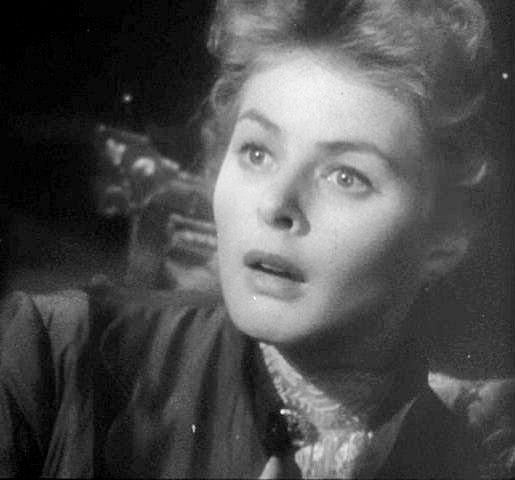
Where does the term come from? Gaslighting comes from a play “Gas Light” which was made into the 1944 movie “Gaslight.” In this movie a husband tries to convince his wife that she is insane by trying to change little things around her and trying to convince her she is just imagining it. He did this trying to save his ass after murdering the lady in the upstairs apartment. Not that I am that old, but I remember watching it. It seems that “gaslighting” came into vogue as a term in the 1960s to describe efforts to manipulate someone's perception of reality. 


From the movie "Gaslight"
And here we are today. The term gaslighting is so commonplace now, it is scary. But let’s look at it in more detail. This is what an online article in Psychology Today that was posted on January 22, 2017, says about people who gaslight:

1. They tell blatant lies,
2. They deny they ever said something, although you have proof,
3. They use what is near and dear to you as ammunition,
4. They wear you down over time,
5. Their actions do not match their words,
6. They throw in positive reinforcement to confuse you,
7. They know confusion weakens people,
8. They project,
9. They try to align people against you,
10. They tell others that you are crazy, and
11. They tell you everyone else is a liar.

That is a lot to digest isn’t it?  It is usually something one person does to another, but I have a feeling we have reached a point where one person can do this to a nation.  Scary, in particular since we just witnessed the use of the majority of these bullets after the meeting of our president with the president of Russia. Truthfully, it is not the first time I have felt gaslighted in the current political climate. For example, terms like fake news and fake press fit in bullets 4, 7, 8, 9 10, and 11.

Some additional observation about gaslighting, (I borrowed the bullets and some of the discussion from this article):

  1. Gaslighting does not necessarily has to be deliberate. We see this all the time. For example, when an African American person (read male) was killed by a police man. In the past nobody seemed to care, except his family of course. He was either armed, on drugs, had a record, was deranged, reached for a gun; and society blindly accepted it. We were gaslighted by stereotype. It was the killing of Trayvon Martin and the Black Lives Matter Movement that changed this or at least is trying to change it. It is about time that we are wondering and fighting this apathy when it comes to all those police killing (yes some might have been justified, but a lot of them were not).  The problem is that we are now experiencing push back from people who have been thoroughly gaslighted.  However, remember, as we saw in the Psychology Today list; gaslighting is most often done deliberately. 
  2. Gaslighting aims to changes a person character, the trust in them self and experience of reality; while simple manipulation just only changes self-esteem. Scary isn’t it? I am sorry, but you have to look at some of the most recent political rallies and the vicious attacks on what they call the “fake press” or the killing in Charlottesville to see how the character of a group of people has been changed by a gaslighter. 
  3. Gaslighting does not always involve anger or intimidation; it can be and often is much subtler. It seems that some gaslighters will shower their victims with special attention but never give them all the attention they need. In bullet 6 of the Psychology Today article the describe it as keeping the victim off-kilter. Other gaslighters will act like they are the victim. Whatever is their modus operando, gaslighters are able to change their victim’s memory, perception of reality and truth (bullets 2, 4, 5 and 7 from above). 
  4. It is normal to forget things and gaslighters can easily manipulate your memory. This is what I teach in my classes; I tell my students to “document, document, document.” I tell them I don’t remember what I had for dinner two or three days ago. 
  5. There may be three (3) stages to the gaslighting process: 
    • You know they are ridiculous, 
    • You consider their view, and then 
    • You consider their view as normal and lose your ability to make your own judgement.
      • Boy, this gets interesting these politically charged days. There was a tweet from our President the other day, telling the attorney general to stop the Russia investigation. This is a direct order and any jury would consider this obstruction of justice. In the past we all thought his tweets were ridiculous, his allies then considered his views, and now his allies don’t even question what he tweeted or even defend him. This is a pure case of gaslighting in my eyes.
      • Now I just learned that he told a rally that Putin did not want him to win, while during the press conference Putin said he did (bullets 1 and 2; the first two steps in the process of gaslighting us on a new item or lie isn't it?).
  6. Concluding, gaslighters do not give a crap about you, they do not see you. Gaslighters are pure narcissists. 
So what do we do about being gaslighted on a personal level or as a nation?  On a personal level it seems that you don’t win by confrontation; however, you win by ignoring a gaslighter.  Naturally, you need to be strong enough not to be influenced by that person, or not allow him or her to influence you.  

I enjoy watching Morning Joe in MSNBC in the morning  (that is when I have the time).  However, I wonder if Joe and Mika have the right approach.   Naturally they partially sell entertainment, but they desperately try to get under the president's skin.  I wonder what would happen of they completely ignore him for a week and not mention him?  I wonder what would happen if we would do that as a country?  If all the reporters and news networks would not cover him for a week, would he self-destruct?  That would be one way of allowing him not to gaslight us, even only for a week.

Tuesday, July 24, 2018

Explorers (7/24/2018)

I have always been a fan of (the lone) explorers.  As a teenager, I read a book about the Scandinavian (Swedish) explorer Sven Hedin.  As an adult, I have been and are still fascinated by the likes of Sir Richard Burton, Charles Darwin, John Wesley Powell, Everett Ruess, and John Muir.  Actually, when working in Yemen I became interested in Peter Forsskal, one of those explorers that not many people have heard of, but more about him in a little bit.

All explorers I mentioned here were cartographers and/or naturalists in one way or another.   They were all ahead of their time and maybe with the exception of Ruess somewhat prophetic; although Ruess disappeared and presumably died at a very young age.  Forsskal died very young as well.

At the time that I liked Hedin and his accounts of travel through the desert of Inner Mongolia, his discovery of a solution for the existence of the lake known as Lop Nor and his travels to Tibet, there was no Internet and Wikipedia,  otherwise I would have learned that in his later years Hedin was a huge fan of Hitler and the Third Reich. Hedin would have been an unwelcome visitor on our bookshelves if we had known that since one of my uncles died in a concentration camp and our father spent time in one.  However, I loved Hedin’s account of his travels and writing about it and now, I wonder if this is where I got my interest and love of the desert; I was fascinated by his tales of the Gobi desert and how in his mind a whole civilization disappeared because a river and lake dried up.  It seems that Hedin was initially motivated by the lust for fame and secondly by curiosity.

If there is any person I admire a lot, it is Sir Richard Burton.  A true renaissance man, he traveled India, Afghanistan, and was one of the few Europeans to enter Mecca. He spoke a multitude of languages (29); he was the ultimate spy for the English empire.  I want to be like him when I grow up!

I will not say much about Darwin except that we named our sailboat “the Beagle.”  I will leave it to you to guess why, but as a hint, I will tell you that Darwin traveled the world on a ship named “the Beagle.”  It was on this ship that parts of his theory of evolution were developed.

Powell explored the west, and one of my favorite books is an account of his exploration of the Colorado River.  He starts in the Green River and trouble starts almost instantly in the Flaming Gorge.  Powell had a great career as a geologist and predicted amongst others the water shortage experienced during the dust bowl, 50 years later.

Muir has occurred in many of my writings and I will leave it at that.  Just look through the labels.  What amazes me is that he not only traveled the Sierra, but he first actually walked from Kentucky to the Florida Keys.  

Which brings me to the two enigmas: Forsskal and Ruess.  

Peter Forsskal was a Swedish/Finnish botanist philosopher.  He was a student of the famous Linnaeus; however, he also studied oriental languages and philosophy.  Interestingly, in 1759, he published a pamphlet entitled (loosely translated): “Thoughts on civil liberty.“  In this pamphlet he pushed for the freedom of print (freedom of expression?), which did not endear him with the powers of the time.  In other words, he was also way ahead of his time, freedom of the expression showed up in the U.S. Constitution that was first proposed 30 years later (I think) around 1789.  I read the pamphlet and it is darn revolutionary.  However, what initially interested me in Forsskal was the fact that he died in Yemen, approximately 20 miles from where we lived.  In Yemen, I ran into a plant that was named for him by Linnaeus (Forsskaolea tenacissima) and I started wondering who the heck this guy was and what he was doing in Yemen in the mid 1700s.  Linnaeus recruited a number of his students to swarm out over the world and collect biological specimens for him.  This was a big thing at the time; it seems that your status in the world went up with the number of species in your collection.  Linnaeus was one of the most ambitious of them all.  Moreover, he was the inventor of a completely new classification system of life; a system that we still use today.  Linnaeus sent Forsskal to the Middle East, first Egypt and then Yemen to collect plants.  It seems he contracted malaria and died in Yemen at the age of 31.  There was a time I was hoping to write an article about Forsskal, if not a book.  Maybe one day, but there is very little information on Peter, at least in English.

Finally Ruess; he was somewhat of an enigma.  He was a poet, artist and can be considered an explorer in his own right.  Since he was only 20 years old when he died in in 1934, we can never really say much about what he achieved either metaphysically, philosophically or scientifically.  However, I think he played on a lot of people’s fascination.  In 1931, at the age of 17, right after high school graduation, Ruess left home and started traveling alone through California and later on through the Four Corners Region on a horse and borough.  He made linoleum and wood blocks, did drawings and wrote home to his parents or brother Waldo on almost a daily basis.  These letters form a daily diary of his travels.  Ruess disappeared in 1934 and is thought to have been killed by two Ute Indians who stole his animals.  The mystery of his disappearance is still a subject to speculations.  In his writings home Ruess appears much wiser and knowledgeable than hi young age would give him credit for.  He even interacted with Edward Weston, Ansel Adams and Dorothea Lange, three famous photographers.

So what fascinates me about these explorers, what is the common thread?  The fact that they roughed it, survived rough conditions to a point, discovered things: new cultures, new plants, animals, not only for themselves but also for society.  Ruess appears to have been murdered; I hope it was swift and as painless as possible.  Forsskal most likely suffered.  It somehow reminds me a bit of some of the situations we endured in Uganda, from being held at gunpoint a few times to having very little food to eat and two matches per night during the civil war when Idi Amin was being removed from power.  It also reminds me of the hikes through Nepal and our stays in villages in areas where few had ever seen white folks; or where we were in danger of being flooded (see this post); my stay at a home where they had a funeral for an important Buddhist lama; or that one time we slept in a home at an elevation above 12,000 feet.  It reminds me of sitting between these two heavily armed Yemenis driving through the Empty Quarter up and down sand dunes looking for a Land Rover mechanic.  In a way, I miss it. 

Reaching back to the past.  While working in Nepal I had to hike into the back country and get into villages where some of the folks (especially kids) had never seen Europeans.
One of my favorite pictures and I suspect I showed this one before, but when traveling on the Tibetan plateau, we ran into this guy and had a great talk with him.

Wednesday, July 18, 2018

My sermon: Between every two pines is a doorway to a new world (7/18/2018)

It has been a while since I posted something in my blog. For my regular readers, I gave a sermon at the church I attend regularly the Unitarian Universalist Fellowship of the Peninsula in Newport News or UUFP. That took a bit of my time. For some of my friends there and friends in Holland, I promised I would post my sermon on my blog. I will start out with the sermon, followed by the quote from E.O. Wilson’s book “Biodiversity” that I read as a preamble, and the closing words. Regular readers will recognize a common thread in my sermon; for new comers I have an extensive list of labels where you can hunt for more.  It is not great literature but a way for me to express myself.  But without further ado, here it is:


Sermon:

Hello everyone, most of you know me, I am Jan. I’ve been a member of the UUFP since the year 2000. I am a biologist, a naturalist.

My funny accent might give it away, but as a lot of you know, I am not originally from here. I grew up on the island of Curaçao in the Caribbean. As a child and teenager, I spent a lot of time in what was called the knoekoe (the local name for the bush) on the island, taking it all in; just moseying and looking around. One of my favorite things was looking for ball cacti, pulling out their little pink fruit out off the white pads, and eating them. I would also just fantasize about what I saw, about making trails so people could enjoy and appreciate nature more.

This carried on in my adult life, I first worked in international development, and then afterwards I had a 20-year stint as a field biologist. I loved being out in the field, experiencing nature in its fullest. I still do, you can try to take me out of nature, but I do not think you can take nature out of me; it draws me in like a magnet. Whenever I can I will be out there, find a tree I can hug and even kiss and be one with for a few seconds, feel grounded.

Of course, you can take photographs of nature (as I do) or look in photo books, but as Annie Dillard wrote in her essay “Total Eclipse”: “Lenses enlarge the sight, omit its context, and make of it a pretty and sensible picture, like something on a Christmas card.” Being emerged in nature, living and breathing it, is so important. At least, it is to me, and I hope to convince you that it should also be for all of us. Only outside can you touch and feel the trees and the soil; breath in the smells and fragrance and feast on the views. As you can imagine, I really hated to go back to the office to write reports about my fieldwork, especially since it usually meant that my fieldwork would turn it into some subdivision and destroy some of nature's beauty.

Earlier on as a graduate student there was nothing better to take pre-dawn measurements of plants in the desert of New Mexico and then hearing the coyotes howling around me at sunrise the minute the sun hit the area. It was magical; you knew they probably had been watching you all along and you never noticed them.

Later on, as a wetland scientist working in the woods I could not just do my job. Especially when working alone, I just loved to take time out at a beautiful spot and just sit on a log or lean against a tree and observe nature around me for 10 or so minutes.

Field work was not without its dangers. I will never forget the day I was struck by a water moccasin also known as a cottonmouth in Virginia Beach. The snake shot out of the high grass and hit me in the legs. I let out a very loud high-pitched scream. Thank goodness it did not break skin but just got stuck in my pants. But that night, 12 hours later my heart was still racing. The very next day, I did come eye to eye with a timber rattlesnake in the same area. I noticed a beautiful skeleton of a possum and bent down to look at it when I heard the rattle. The rattler just stood there and warned me to back off, as to say “this is my carcass,” so I slowly backed off, turned around and walk a different way.

Did I kill the moccasin that bit me the previous day? Absolutely not! As our 7th principle mentions, we have RESPECT FOR THE INTERDEPENDENT WEB OF ALL EXISTENCE OF WHICH WE ARE A PART; or in other words, I believe that we all have our place on this little blue marble that floats in space and we need to respect it and take care of it and of each other. The snake defended its territory and I stepped in it. I did not get hurt and I know my heart was good, at the time. On the next day, the rattler just warned me to stay away. Not all snakes are bad, not even moccasins. A number of years ago I ran into two that were mating (and they were not aggressive), they were not at all interested in me.

You have to take precautions, during the times I've spent outside, have been bitten by so many ticks and have gotten rocky mountain spotted fever, one of the tick-borne diseases. And let's not talk about all those mosquitoes.

Did all this deter me from ever going out into the woods or nature again? Absolutely not. This was in 2003, and I still go into the woods for work and I still do it almost daily for pleasure. Am I more careful? Naturally, I am getting older you know. But I just love to explore, bushwhack and take it all in.

I think that I suffer from an extreme form of Nature Deficit Disorder. Nature Deficit Disorder is a term first defined by Richard Louv, it indicates the need of people to reconnect with nature at times to regain balance in their lives. Louv contents that a lot of personal inner problems, social problems and inner-city problems can be brought back to the disconnection from the natural environment.

The way I deal with my Nature Deficit Disorder has always been to go out in nature. I guess in the old days when I grew up on that tropical island you could have called me a loner. Being out in nature was my solace, and actually it still does. You could say that I could be considered an introvert. Later on, I learned by way of some psychological tests that I am truly an introvert among other things. However, as an adult I have forced myself out of my shell when I am in public.

Being an introvert does not mean that you do not like to talk to people or that we are anti-social. Every person needs human interaction and so do introverts. However, we introverts also need a lot of recovery time or me-time. For me it is so comforting to retreat into my own world and in particular in the natural world where I can be alone. That is my way of expressing and dealing with this curse of being an introvert.

So, when I am done teaching or interacting with people, my alone time is best spent outside hiking in the woods, on my sailboat on the water or in my kayak. Doing this alone would be great, but with my loved ones is great too, as long as they do not expect me to talk too much. I often just like to be in my own thoughts. However, when I am sailing I am just concentrating on staying on course and not running aground, but even that clears my mind.

I am not sure if he was an introvert, but the famous John Muir who hiked up and down the Sierra Nevada around the 1900s is credited as the person who initiated the Sierra Club, and was the impetus of the National Park Service wrote “the deeper the solitude the less the sense of loneliness, and the nearer our friends”. Muir also wrote: “In every walk with nature one receives far more than he seeks.” I think he was onto something here.

Earlier this decade Japanese researchers introduced the term Shinrin-yoku loosely translated as forest bathing. No, it has nothing to do with an outdoor shower, although I am still trying to convince my wife that we need one of those too. The Japanese researchers showed that the volatile compounds or phytoncides emitted by the vegetation in a forest, in particular the conifers, lowered the blood pressure and slowed the heart rate of their subjects, and one exposure to these chemicals (or to the woods) could last as long as two weeks.

John Muir also wrote: “Between every two pines is a doorway to a new world.” As our friends from Japan found, of all the trees in nature, pines are the highest emitters of phytoncides, those chemicals that are good for you.

Maybe this is why pines have a rich history in mythology. Of course, we use them in our Christmas celebrations and with good reason. Many cemeteries plant pine trees and other conifers as symbols of eternal life, they stay green throughout the winter. Druids in England lid bonfires in Scotch pine forests during winter solstice celebrations. The Romans worshiped pines during the spring equinox festival of Cybele and Attis, while in ancient Greece worshippers of Dionysus often carried a pine-cone-tipped wand as a fertility symbol. Even in Siberia and Mongolia, people there enter a pine forest in silence and with reverence.

Native American people see the pine tree as a symbol of wisdom and longevity. Its needles and sap are medicine that protects people from illnesses, witchcraft, and more.

In the Orient the pines are also associated with longevity, virtue, youth, masculinity and power. The Japanese word for pine is Matsu which also stands for “waiting for the soul of God to descend from heaven.” In ancient Shinto beliefs, gods were said to have ascended to Heaven on a pine tree, where they now reside on a beautiful volcanic mountain in giant or old trees. Pine trees are associated with the New Year in Japan. So much so that many Japanese hang a bundle of pine twigs and bamboo trunks known as a Kado matsu ("Gate pine") on their doors to receive a blessing from the gods.

This almost reminds us of Muir’s quote: “Between every two pines is a doorway to a new world,” doesn’t it?

While I love that quote, and conifers such as pines rule, I would love to expand Muir’s quote to: “Between every two trees in a forest is a doorway to a new world.” I strongly believe there is power in nature as a whole, and not only in pine trees.

For me, it does not matter how familiar or unfamiliar the woods are, every time I step outside into the woods the worries of the world fall off my shoulders; I can retreat into my own world and relax. Early on in my life, in Holland, Uganda, Nepal, Yemen, and New Mexico I was in my happy place when I was alone just strolling around in nature, looking around and sometimes studying the things I saw around me.

What do I look for when I retreat into the natural world? For one, I grow bonsai trees at home and it is great to study the canopy of mature trees in the forest for examples to style my little trees. In my reading by E.O. Wilson you heard me tell you that he considers that there is more order in a handful of soil than in on the surface of all planets combined.

To me nature is full of order; full of hidden patterns, and that is another thing I am always on the lookout for. It is survival of the fittest, parsimony, and full of those patterns waiting to be discovered and understood. That is what I do in the woods.

Think about it, every spring the leaves come back, the dogwoods and the redbuds flower and we have to deal with pine pollen. Let me tell you, I had the worst allergy season this year. In summer months, nature does its thing, I enjoy watching the adult birds raise their young, watch the skinks (or lizards) in our backyard, and just see everything grow. In fall nature is preparing for winter. In winter, you notice things you hardly see other times in the year, like when looking up in the canopy you see that not many tree canopies touch each other. Also, that there is a rhythm on the way the trees branch and the way side branches come off.

In her book: “The Solace of Open Space” Gretel Ehrlich wrote: “Autumn teaches us that fruition is also death; that ripeness is a form of decay. The willows, having stood for so long near water, begin to rust. Leaves are verbs that conjugate the seasons.” Yes, nature to me is very predictable and it helps me to sort my thoughts. So yes, a new door opens every time I enter nature, I discover something new.

Those snakes, ticks, mosquitoes and other varmints are not going to stop me from going out there. I take precautions, use bug spray, watch out where I step. I need to get out and be one with nature. The tall trees are my cathedral, my spiritual home. That is why all those parallel tree trunks in the forest are so important to me; they are my doorway to a different, a new world. As I said those forests are something we all need, not only for clean air and clean water, but also as a spiritual experience, for our sanity, our health and overall wellbeing. Once I enter the woods I need to become one with it and feel grounded, to touch the bark, feel the tree, like when I was young when I needed to eat those little red fruit in in those cacti. But most of all, I need to get out there and I urge you to go too.

----------------

Reading:

Organisms are all the more remarkable in combination. Pull out the flower from its crannied retreat, shake the soil from the roots into the cupped hand, magnify it for close examination. The black earth is alive with a riot of algae, fungi, nematodes, mites, spring-tails, enchytraeid worms, thousands of species of bacteria. The handful may be only a tiny fragment of one ecosystem, but because of the genetic code of its residents, it holds more order than can be found on the surfaces of all the planets combined. It is a sample of the living force that runs the earth – and will continue to do so with or without us.

Edward O. Wilson
The Diversity of Life

------------------------

Closing (Benediction):

Let us go out now into the sunlight filtered by the pine trees and oak trees. May the subtle fragrances of the woods bathe your body and your lungs. May this all bring you blessings and enhance your enjoyment of life for days to come, until the next time you can return to nature and experience it all over again.

Bless it be.
Monday, June 25, 2018

Motel room DNA (6/25/18)

As most of my loyal readers know, I am a frequent traveler. I travel a lot for work and stay in motels and hotels. Most of my travels are in Virginia; however, I do travel out of state, but that is mostly for pleasure. We actually just got back from a trip to New England where we watched our daughter get her graduate degree in Divinity from Harvard. Afterwards we spent a few days running around in the western part of Massachusetts, southern Vermont and New Hampshire. Most of the hotels were courtesy of my hotel points (Holiday Inn), or courtesy of my professional travels.

Those professional travels and staying in hotels is always somewhat boring, but on the other hand also strange at times. The strangeness is particularly acute when you stay in a new motel, like the one I stayed in the other week or when you go out of state on vacation. You need to learn the lay of the land, where the good restaurants are, what the best route is to drive to the place you are teaching, and just the layout of the room. One of the main question is, how much light comes into the room at night and how do I get to the bathroom in the dark at night without tripping over things or stubbing my toes (we older guys have at least one required bathroom visit every night).

There is also always some strangeness not knowing what to expect from your neighbors. How noisy are the rooms and how noisy will the neighbors be? Will they be quiet or won't they. Last week I had a snorer next to me. Just faintly, but I could hear him or her and it just put a smile on my face. It somehow made me think of some of the other noises you might hear when it is really quite, and I felt blessed with this very muffled sound. I wrote about sounds that next door neighbors make in this post last year. Truthfully, that was not the only time I've heard it. There is still a lot of loving going on in hotel rooms; it ranges from the rhythmic thumping to the more, sometimes, quite vocal ones.

This sometimes makes me wonder about the room I move into for the night (or two). Who was or were the occupants before me, and what went on in there just the night between those sheets, before I lay my tired body in that bed? Wanna let your imagination go wild? Or was it one of those filthy roadside crew guys or roofers from Ohio who I talked with the other day. Those guys spend two three months away from home on a roofing crew, live in motels; at night each person drinks a 12 pack of cheap beer, and eats pizza and passes out to repeat the process the next day after spending the whole day on a hot roof. I am sure they take a shower and clean up before they get in bed, and I actually had a great talk with them that one time. The money is good, and they all miss their wives at home. It reminds me of that one time we did an ecological survey of an area in South Carolina that was burned. Every evening we came out looking completely black, covered by black soot. You should have seen the bathtub after I took a shower that night. I felt sorry for the cleaning crew, we had a hard time cleaning the shower after we were done.

Hilton Garden Inn
My room for the night.  No ghosts of the previous night visible.  This Hilton is always nice and clean and a pleasure to stay in.  It will be my home for two nights.
Wondering what went on before you, makes me wonder sometimes where to sit in my room. How much DNA was left behind on the bedspread or even on the chair or couch in that room? What am I laying my head on? I heard that friends of mine check into a room and always purposely spill something on the bedspread and then ask the front desk for a clean one. I guess that might minimize foreign DNA exposure at least on that part.

It is not only human DNA I wonder about. Bed bugs are another thing. Someone before you could also brought them into the room. My wife inspects places for bed bugs, so she trained me to look for them. Every time I check in that is the first thing that I do. I am sure that it doesn't guarantee anything, but it makes me feel better. Still, every time I come home, she gives my grief about potential bed bugs and asks me if I parked my car in the sun and exposed my suitcase to the heat. The problem is that I usually bring my computer bag into the place I teach and that bag or bags do not get exposed to the heat.  I also keep some of my prescription drugs in that bag and my vitamins and ibuprofen, which I do not want to expose to heat.

As you can see, traveling can be fun; there are all kinds of thing to keep account of.  It is often a lonely business, especially when I teach alone.  After work, it is often dinner alone and then back to your room where you drown yourself in the news, your social media, a book, or something else (I do not do sports or a lot alcohol like those roofers from Ohio, etc). However, you could also let your imagination go wild and fantasize about what went on in your room before you, and be a somewhat voyeur after the fact. Oh the perils of traveling.

Monday, June 11, 2018

Depression sucks (6/11/2018)

Kate Spade, Anthony Bourdain, what news stories last week! It really bugs the cap out of me. I have a father who took his own life with a gun. He was depressed and took it out on his loved ones. I was an ocean and a continent removed, but still he did it on the day that I bought a new car to start my new job after two years of under and unemployment. I had called him the day before to tell him this and had no inkling about that he was about to pull the trigger. Did I resent him for that? Yes I did in some form or fashion. Was I hurt? Yes, I think as a family member of or close to someone who commits suicide it hurts, I'll never forget it. In a way I had expected it and had made peace with never seeing him again the last time they visited us, a half year earlier.

A number of years later I got the phone call from my brother that the person we considered one of our best friends committed suicide. My brother tried to convince me that he hurt more than I did. Who gives a shit about comparing hurt at such time or any time after that? Yes, as a younger brother he has always been in competition with me, and even in our friend’s death he tried to be better (more hurt) than me. 


A number of years ago, a good friend gave me credit for saving his life. He was about to do the same and it was me along with a few other close friends who were able to talk him off the ledge. Now every time I see a post of his on Facebook, I still let go a sigh of relief knowing he is still OK, or at least alive. I don't believe you (he) can ever be safe, but hopefully friends and family can help you (him) through your (his) darkest hours.

Growing up I learned that suicide is the most selfish thing you can do in life: “end your suffering but usually substantially increase the suffering of others.” Others say it is a cry for help, at least when people survive the attempt. I am not so sure anymore, I think that is probably mostly bullshit. It is depression, and that can be chemical but also just mental.

Depression is a scary thing, whatever the reason. I have been depressed, and have I ever thought about ending it? Absolutely, but only for a second and never really seriously. First as a teen when my parents pulled me away from my home in the sunny Caribbean and I ended up in damp cold Holland. I also thought about it at some other times in my adult life. Right now I am in a good place, so I have no worries, but I kind of know what depression is. Every time I had those thoughts of ending it, I knew they were ridiculous and would not solve anything, except solve my misery. However, I quickly realized that I would miss out on so much, or the rest of the story, and how hurt we were when our loved ones did it to us. I told myself to snap out of it. I realized that there was so much more to discover, to teach, to see, to photograph, to hobby and now to write about. I had and have so much more to say and (maybe my selfish way) to contribute to society. I forced myself to do one of those things I really enjoyed, like those I mentioned above, or some of the things I have mentioned in my blog like forest bathing, or walking in nature and exploring. It did not solve my depression instantly; yes, I stayed depressed, but every time depression set in I tried it and slowly the veil lifted and things started looking better again.

Here is a selfie of my ugly face on to of Mount Monadnock in New Hampshire.  We hiked it a couple of weeks ago.  Although the mountain kicked our ass (my knees still hurt two weeks later), it was an exhilarating thing; it lifted all our spirits, as it should.
Naturally, I had a few visits to a psychologist, I did not feel comfortable with the guy. But then I went to talk to him about another issue than depression, and he was OK in helping me with the issues at hand. For me it was a lot of working on myself and realizing that I was ridiculous and actually hurting my loved ones. I realize that I make it sound so damn easy, and it isn’t. I am also sure that I again will have periods of depression and hopefully will get through it.

As you can see, this week brought up a roller coaster of emotions for me. I still often think about my father and Rob, especially when there is another high profile suicide in the news. The first time it really hit home was when I heard about Robin Williams, although I have forgiven him, knowing what we know now. The other famous suicides will also eventually slide off my back as well. My father's suicide will never be easy to forget since he killed himself on Dr. Martin Luther King Day, January 15 and I will get a yearly reminder as long as I live.