Tuesday, September 29, 2015

Yorktown ((9/27/2015)

The concept of global warming has been in the news the past week.  It started with the Papal visit to the east coast and when I posted a few pictures of the yacht club on my Facebook account, one of the first questions from one of my friends on the west coast was: "Global warming? "  At the same time a very conservative Facebook acquaintance posted something about the Pope being the Antichrist because of his opinion on the environment, evolution and homosexuality.  Boy it sure has been an amazing couple of days.  It is nothing I am going to solve in this blog, but it is also not something I wish to ignore.

Arriving at the yacht club around high tide Sunday morning it was evident that there was a coastal flooding issue. 
The water had retreated a little, but not enough for me to get on the finger pier and on the boat.

Blame a high pressure system over Maine and a coastal low off North Carolina, and there we had a stiff (20 to 30 mile per hour) easterly wind for the past couple of days.  Wind like that will pile the water up into the Chesapeake Bay.  With high tide it will push it in and even with low tide it will really not let the water out.  (This is a great website that shows you a comparison between the expected astronomic tide and the observed tide in the Chesapeake Bay, I assume there are other websites that do this for other places as well).  Thus with each successive tide water gets higher and higher.  Resulting in coastal flooding.  Yes, sea level rise increases the effect and we all know what causes sea level rise.  Or do we really?


High tide in the York River on Saturday
While you can't see it on this picture, the tide was still rushing in under the Coleman bridge at Yorktown.

We here on the east coast in particular in the Chesapeake Bay area are at a distinct disadvantage when it comes to sea level rise, at least I am told.  We live in a subsidence area.  During the last ice age, our area was pushed up.  We were not covered by ice, but the oceans had retreated.  This made the land lighter, and with the ice pushing on the land further to the north, our land was pushed up.  Our countryside is currently sinking, making any sea level rise more pronounced.  On top of that we were pushed up by a meteor impact that fell in the lower part of the Bay and we live on the rim of the crater.  This rim is sinking as well.  Finally, out in the ocean, the Gulf Stream makes a bend towards Europe right near us, and that bend will push water our way as well.  So this is why they predict a larger sea level rise in our area while elsewhere on the east coast it likely to be less.

Seaside goldenrod swaying in the 20+ mph breeze at the beach


Tuesday, September 15, 2015

On trainers and teaching, Part V on new courses and old experiences (9/15/2015)

These past two months I have been working on the development of two new courses that I am supposed to be rolling out this fall.  They are both on subjects that I am very familiar with,  so it should be a breeze,  shouldn't it?  Well, not so fast.  I think familiarity makes it often more difficult to explain a subject to a novice in such a way not to blow him or her out of the water.  Making things understandable and a learning experience without being condescending or dumbing it down too much as in being offensive is a challenge.  Up to now I have been relatively successful with it, but I don't want to fail now.

The courses I am working on is a course on wetlands and a course on soils.  Both are geared towards practitioners in erosion and sediment control and stormwater management.  These are people who need to know the basics but definitively do not need to become experts.  In a way they need to be able to interpret reports that they get to review or understand that they need a report when they did not get one.  Having worked intensively as a wetland scientist since 1994 and been involved in soils all the way back since the early 1970s, it is fun developing classes that interesting and applicable.  Thanks goodness, I have a friend, a fellow teacher and a soil scientist (all wrapped up in one person) who is partnering me on the soils class.  David will also be helping me teach it; we make a great team when we are on the road.

For my wetland course I am teaching my students how to recognize a wetland in the field.  So I went out back, behind my home to take pictures, braving ticks, mosquitoes and chiggers.  These trees show clear signs of flooding.  So nice to be out in the field tromping in the woods.  These trees show clear signs of seasonal flooding, the dark wood is how far up (3-4 ft.) the water gets in the winter.

In my class design and delivery I rely on my life experience, dating all the way back to my college years in the mid 1970s.  Yes, I have that advantage, I have all this experience.  However, I feel that in the past six years I have somewhat stagnated in my professional field.  I can't believe that I've been away from field work and into the class room (and class design room) for that long, having to rely on my past experience and on stories that I now hear from colleagues.

This realization that I have such a multifarious experience came rushing back to me these past few weeks or so since I received a surprise email from an old high school friend of mine who lives in a foreign country.  It was fun to hear from her, and in writing back made me relive a lot of my life back then, but also between the time that we parted our ways and now.  I wrote her a very brief email where I described what happened to my wife and I during the passed 38 years and our world travels.  Just thinking about that email makes my head spin, which is why we typically don't mention it to people, because when we do, we mostly get blank stares.  But yes, I (we, my wife and I) need to write (a book?) about our experiences in particular about the time we lived in Uganda in the late 1970s under Idi Amin.

Idi Amin
But come to think of it, all these 38 years worth of experiences are what I bring to class development and teaching, and I hope many teachers do the same.  When I teach, I tend to tell stories, anecdotes, and give examples of what I have seen (no I don't teach about Idi).  It is relatively easy, having worked for almost 40 years.  However, I sparingly use my international experience in my classes.  When I teach the stormwater classes I will mention my experience in Nepal where deforestation resulted in the disappearance of streams, of firewood and fodder for livestock, or worst, landslides.  I sometimes see students look at each other and smile (kind of in disbelieve that I also worked in that field) when I start a story with: "When I worked in the mining industry in New Mexico ..."  But I really did work in the mining industry.  I hope that these stories makes the classroom experience more fun for my students, and of course more interesting and a better learning experience.    For myself, I do think it is so invaluable to be able to bring real life work experience with me in the class room and I even  gladly borrow examples from other people's experience to illustrate points (I will give credit and will not claim them as my own).

I kind of miss being out there in the field and making new experiences.  I am starting to notice that I am getting rusty.  Thanks goodness I still learn and gain other experiences and expertise by fixing my sail boat, sailing and traveling through Virginia; I will never stop learning.  Hopefully I can apply my boat stories to my teaching one of these days.  If you are a teacher I hope you too reach in that big bag of experience you are carrying on your back.

On a work trek with my wife (and one of our two dogs) in the mountains of Nepal in 1982 or 83.  I sometimes had to walk 7 days for a an one hour meeting and walk back seven days.  Thanks goodness it was through the project area and I always had my eyes and ears open to do project (extension) type work and talk natural resources conservation.  This is probably close to the hill (looking at it) that dammed the Kali Gandaki valley by a landslide after this year's earthquake. 

Friday, September 4, 2015

Reflection (9/4/2015)

Amazing, this blog was started as a photo blog.  I posted a nice picture from my sailboat on June 25, 2013, with just an amazingly simple one sentence statement, that had less depth than something a 6th grader would write.  I used to be an avid photographer and this was my way of trying to get back to my hobby.  Moreover, since I would be traveling to a different part of the state of Virginia to teach every week, I felt it was a great opportunity to share some pictures of the often beautiful sights or at least my views of the State.  Finally, it also was a way for me to let off some steam.  That day was the first day of a forced move where I and my program moved from one State agency to another State agency and that caused a lot of anxiety to the group of people who were forced to move to the other agency.  We did not feel welcome at all, there were definitive signs that we were not, and we did not know what would happen.  Comparing notes among colleagues now, the anxiety has gone away and we feel accepted and fine where we are.  Now just a raise and everything will be fine!

From left to right these are the three locations I have successively worked at in Richmond over the past six years (left DCR, DEQ to the right and what I would call the half way house in the middle) .  I have not been job (employer) hopping, just forced building hopping and agency shifting.

In fact, I really did started this blog for me.  I announced my blog to no one; not even my family.  I did not want my ego or anything else to get in the way of expressing myself and doing what I did.  I had no ambition with this blog.  Little did I know this darn blog would grow up to be like this.  When I post this entry, it will be my 254th.

Looking back through some of the posts I put up, there definitively is a trend.  I have become more verbose; I have become bolder; more outspoken; become a bit more of the teacher that I am in real life; maybe too self-indulgent; and taking myself a bit too serious?  Yes, I have always tried to include an outside link or two (too much Wikipedia maybe) since I do not want to claim to be a “know it all”, but as I mentioned in this blog post, there is a lot of stuff stored in that big head of mine.

Did I mention my big head?  This picture was taken last year during a nature walk in the Roanoke area last fall (2014) after a fun day of lecturing in a nature retreat.
So why write about this now?  There is no anniversary of this blog or of the move to DEQ.  Well, this past Thursday morning I read an article in the newspaper about a Dutchman with the name Jaap Haartsen.  Mr. Haartsen is the inventor of the Bluetooth.  He invented it while working for Ericsson in Sweden.  It seems that he only works (worked) 40 hours per week, turns his phone off at 6 pm and does not check emails in the evenings and on weekends.  Moreover he goes hiking on weekends.  It claims that his way of recharging and reconnecting with real life is what he needs to be inventive and creative.  This is very different from what we see here in the U.S.  When I came in the office this morning, the first thing my supervisor said was "have a productive day" (and he says that almost every day), that is what our U.S. culture seems to be increasingly based on, productivity, not creativity.  It would be so much nicer if he would wish me "a creative day", because that is what course design should be, especially when your do it from scratch.  I think Google is still doing it right, giving people an hour or so do do something different, but the Amazons and other groups, it seems like they are just emphasizing putting in hours and mouse clicks.

So the story about Jaap Haartsen made me think about this YouTube clip that I saw recently on Nature RX; it is a spoof on the need to reconnect with nature,  I have written a lot about it in my blogs and borrowed the phrase "nature deficit disorder."  Looking at the labels, I have used the term in at least 20 blogs of the 253 that I have written up to now.  I used Nature 79 times as a label on posts.  I do think it is so darn important to reconnect with nature, with ocean, with water, you name it; just the natural world.  I find it disarming, calming.  As the naturalist John Burroughs wrote:

"I go to nature to be soothed and healed, and to have my senses put in order"

No, I will not invent the next Bluetooth, but it brings down the blood pressure; it is where I formulate a lot of my ideas for my classes, my blog and just life.

We went for a sundown/moon rise kayak trip last Saturday which culminated with a picnic dinner on a narrow sandy peninsula in the bay.  It was very private and the views were spectacular.  This is what I call taking care of your "Nature Deficit Disorder", while even getting some exercise. 


Wednesday, August 26, 2015

Evening sail on the Chesapeake Bay (8/22/2015)

We had a great and interesting evening of sailing this past Saturday.  We took our daughter and significant other sailing in the area where the York River enters the lower Chesapeake Bay.  We had a couple of firsts and it was an interesting time.  Sara, our daughter’s girlfriend had never sailed in her life, so that was a first.  The week before there were reports in the newspaper about major algae blooms causing gorgeous bioluminescent events on the river.  The photographs in the newspaper were spectacular.  We had seen the same thing during the meteor shower when my wife and I walked along the York in the evening and aquamarine waves were crashing into the shore that night and we hoped we could replicate something similar for our guests. 

So we decided to make it an evening sail in the hope the algae were still going strong.  We made chicken-humus-spinach-sprout wraps for dinner and armed with some snacks and drinks we set sail at around 5 pm.  The wind was from the north at 10 to 12 knots.

Well, 10 to 12 knots does not sound too much, but coming from the north is fun sailing especially in the southern Bay.  Typically waves are the highest when the wind is from the north and northeast.  With wind from that direction, the waves do not encounter land for a long stretch and are able to build (this is also known as fetch); and even with just 10 knot wind the waves can easily build to 2 feet in height.  Maybe no big deal, but especially when it is dark you cannot see the few extra-large wave that sneak in from time to time; both my wife and Sara were surprised one of them and got thrown around and were slightly hurt and definitively shaken up.

But let’s start with the beginning.  We started out with a somewhat bad omen.  The head sail (jib) went up great, and when it came to raising the main, I had forgotten to connect the halyard to the main.  So I had to get on the cabin to connect the halyard.  A little screw up, no big deal.  Somehow, the main did not want to go up all the way, whatever I tried.  It was stuck, this dummy did not put on his sailing gloves and I am still bothered by a blister on my finger from trying to pull the main up.  Oh well, it might not have looked that pretty, but the boat sailed and I was not going to let it ruin our evening.  I just lowered the boom a bit and it worked.  Next problem, I was not able to pivot the outboard out of the water, oh well again, in hindsight, even with our little sea anchor we still averaged 4.5 knots over the ground that evening.

We were flying, but boy it shows that, now I have all the windows in, I need to pressure wash the boat.  Also the headsail is a little dirty, but there is little I can do about that, I understand.

About hour into our sail, “BANG”, and the boom flies down wind.  The shackle that holds the mainsheet block attached to the boom snapped.  What to do?  Start the motor.  Time to take the vang apart, and use the block and the shackle from the vang.  So while the crew holding on to the boom, I tried to get everything rigged up.  Here comes one of those larger waves and the pin goes overboard.  So let’s try the other end of the vang.  I am able to get that one installed without any additional incidents and we are off sailing again.


After the repair.  The admiral and me with the new block and shackle from the vang.

In the meantime the sky is getting absolutely gorgeous.  We are all clicking away, cell phones, go-pros, Olympus T-3, you name it.  After having dinner it was getting dark and it was time to get the lights up.  We still do not have electricity on out boat, so I bought a set of battery operated navigation lights.  Somehow I had not put them up before we left, so I gave the helm to my wife and crawled up front (without life preserver and two to three foot seas) to put the thing up.  Well, a screw came lose.  Miraculously, I was able to catch it but I needed to crawl back to get a screw driver and fasten it again.  Then crawl back to the front and attach it.  Finally back in the cockpit I checked the GPS for our position and had the shock of my life.  Because of all the time it had taken me to get the navigation lights up on the bow, we had gone too far and actually crossed an area that we usually would avoid at all cost.  The area we crossed has a sand bar with a depth of 4 to 6 feet and our boat draws 4 feet and having no electricity we have no depth finder.  Thanks goodness it was mid-tide, but with two foot seas, we could have hit bottom at the bottom of the waves.  With me up on the bow, trying to attach navigation lights, that would have been very interesting.  Nothing happened, but we learned an important lesson: situational awareness; make sure you know where you are and that you need to have enough wiggle room just in case you need it especially when working on something!

The sun is about to set in the west.

A nice head wind, waiting for darkness and the algae glow.

Shutterbugs.

The rest of the evening went great!  After it got completely dark the light show started.  The sail was absolutely spectacular.  Black seas with aquamarine streaks (the crest of the waves), and an aquamarine wake from the boat sometimes bright enough you could read a newspaper by.  Unbelievable.

The algae that are causing the bloom are Alexandrium monilatum.  The algae is somewhat toxic; not horribly toxic to humans, but this species does appear to be toxic to young fish, young oysters and young crab.  Older ones seem to be able to withstand it.  While the bioluminescence is a sight to behold, it is also an indication of too much pollution in the water.  The algae bloom are caused by the pollutants we generate on land and that runs off in our stormwater, in particular phosphorus and nitrogen in animal waste and fertilizer.  An interesting juxtaposition, my hobby (sailing) and my profession (sttormwater education), all together.

Thursday, August 20, 2015

On trainers and teaching, Part IV (8/20/2015)

Most days when I commute to Richmond I listen to Doctor Radio on Satellite Radio SiriusXM Channel 110.   Thursday mornings between 8 and 10 is the Emergency Medicine Show with Drs. Billy Goldberg and Howard Greller.  In his show Dr. Billy lamented about someone complaining about him being a clown on the radio and his shtick and that struck a nerve with me.

Being a public speaker/teacher who travels throughout the state of Virginia people are always surprised to hear that I consider myself an introvert.  When I am in front of a class I make the darnest effort to lose that and I try to fake being as much as an extrovert as I can be.  Yes I move around a lot, that is my way of loosening up; I joke, I tell (to many?) stories and anecdotes; and during breaks I try to interact with the students to see how the class is going.  Yes, I have been told that I am too flippant or cynical at times, but in my eyes that's to make a point.   Trying to be an extrovert is absolutely exhausting to me!  It is so nice to just sit alone in a restaurant later that evening and people watch, not having to interact with anyone.  There are exceptions of course, and that is when I teach with close friends.

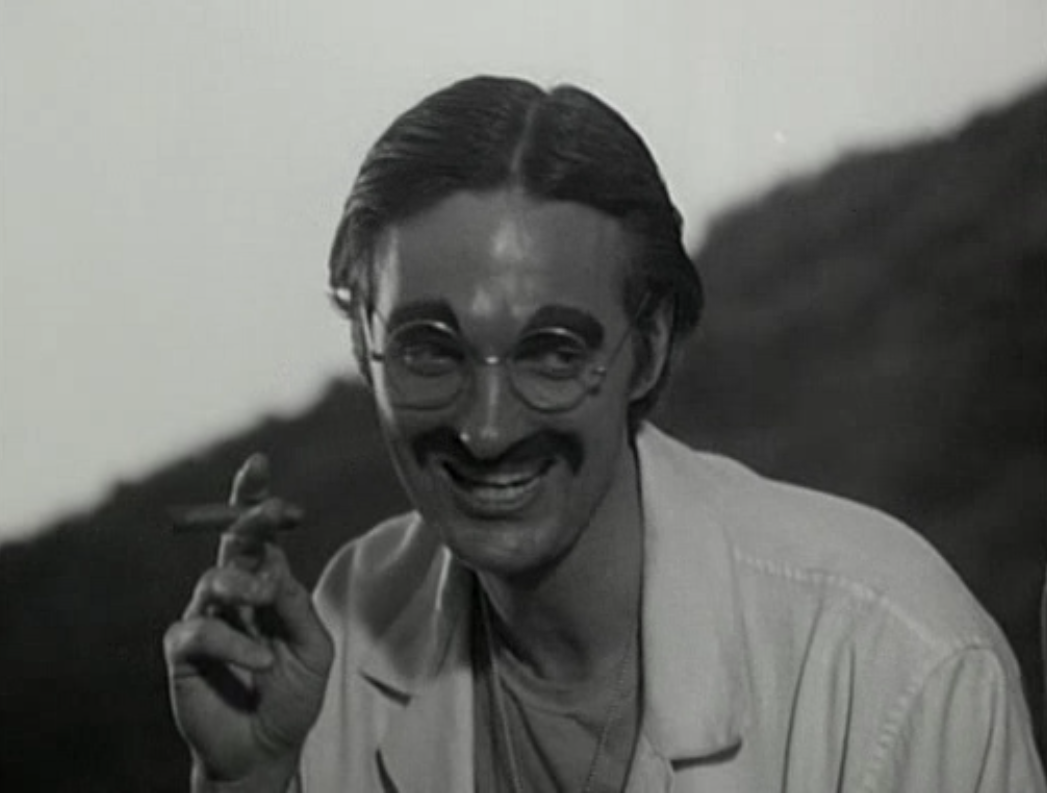
So yes, I do understand Dr. Billy, you have to be serious in your job, work is a serious business, but you need an outlet, some levity whether you are an emergency doctor, or an introvert in a job made for extroverts.  You can heal, teach, do your job at your best without taking yourself too serious all the time.  This reminded me of the episode of MASH where Alan Alda came into the O.R. dressed like Groucho Marx. 


How can I be sure I am an introvert?  I’ve knew it all along, but really figured it out when I went to leadership school for the UU church we go to.  We had to do the Myers-Briggs Personality Test and it showed I was an INFP or someone who is an Introvert, who relies on Intuition, who is Feeling and Perceiving.  Reading some of its descriptions even in Wikipedia INFP describes me to a T, including the desire for creativity but also (as most of the people close to me will attest to) my sensitivity to criticism.  Wikipedia shows an interesting list of people who are INFPs.  Wow. 

How does this relate to training?  Well borrowing this from Wikipedia:

  • I – Introversion preferred to extraversion: INFPs tend to be quiet and reserved. They generally prefer interacting with a few close friends rather than a wide circle of acquaintances, and they expend energy in social situations (whereas extraverts gain energy).
  • N – Intuition preferred to sensing: INFPs tend to be more abstract than concrete. They focus their attention on the big picture rather than the details, and on future possibilities rather than immediate realities.
  • F – Feeling preferred to thinking: INFPs tend to value personal considerations above objective criteria. When making decisions, they often give more weight to social implications than to logic.
  • P – Perception preferred to judgment: INFPs tend to withhold judgment and delay important decisions, preferring to "keep their options open" should circumstances change.

Combine that with statements like low assertiveness and poor organization, and that is probably how I might be perceived by some of my colleagues.  My office may look like a mess, my brain is a mess, but it is all there.  I brood, and at one point it all come out and it flows out on Power Point, in a blog, all in a concise package that we can call a class, or rambling like this.  Even in planning trips, or shed building projects in the back yard.   My wife has learned to roll with the punches it all comes out ok even without paper plans and assertiveness.  I know it and so does she.